
Heritage, Housing, People – the future of Places
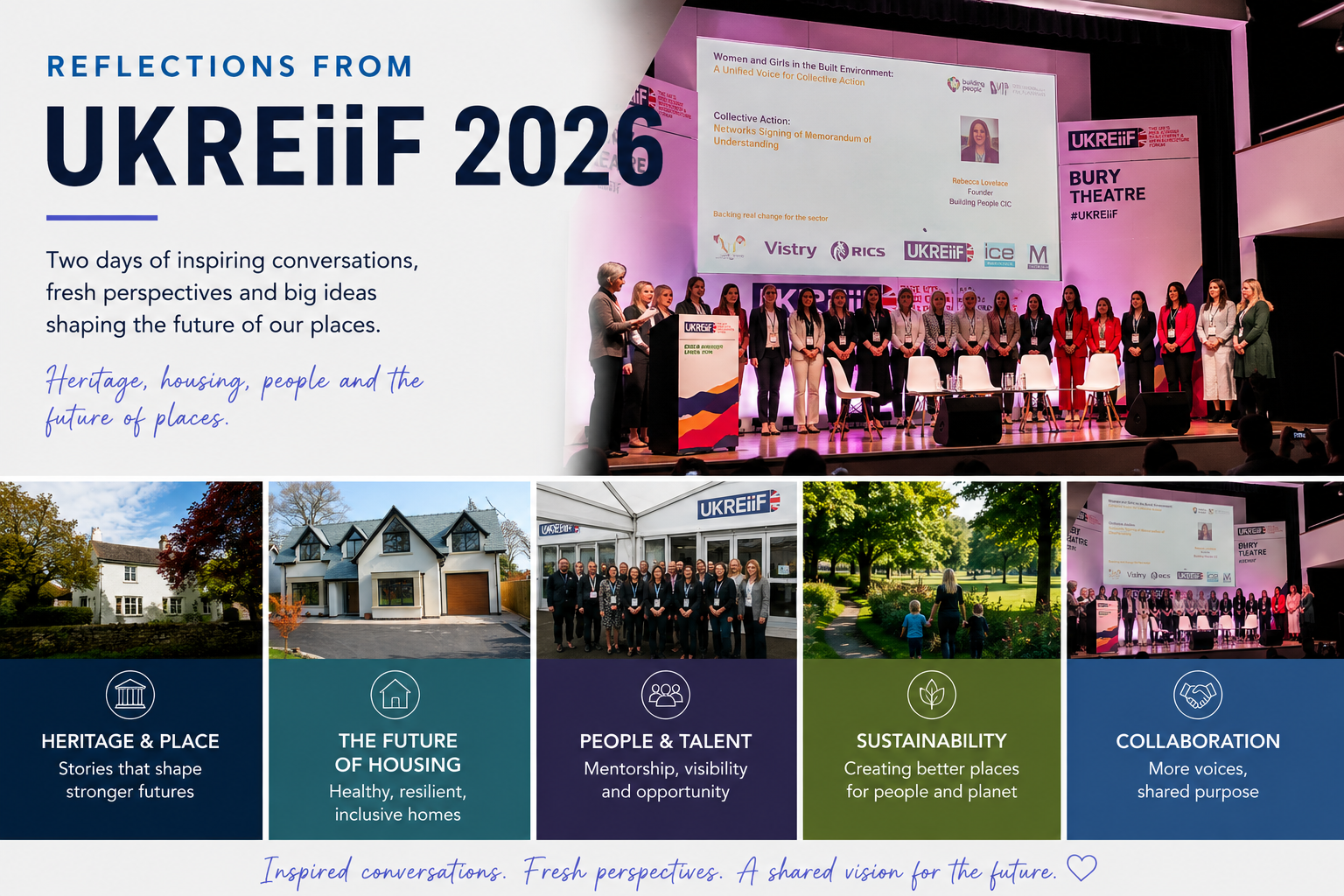
Reflecting on the UKREiiF 2026 Conference
Now I’ve had time to reflect on my two days at UKREiiF (and recover from the amount of walking involved!), I’ve realised just how much I took away from the experience — not only professionally, but personally too.
As a first-time attendee, I expected insightful conversations around development, housing and infrastructure. What I perhaps didn’t expect was how strongly the event would focus on people: communities, inclusion, education, mentorship and the long-term social impact of the built environment.
One of the biggest themes throughout the conference was that successful places are about far more than buildings. Whether discussions centred around heritage, housing or sustainability, the recurring message was clear: good development must consider the people who use, experience and shape those places.
The sessions around heritage particularly resonated with me. There was a strong emphasis on moving away from seeing heritage purely as a constraint, and instead viewing it as a story for the future — something that creates identity, community cohesion and meaningful connections to place. Conversations around conservation skills shortages and climate resilience also reinforced the importance of investing in traditional building knowledge and retrofit expertise.
Housing discussions focused heavily on what “future-ready” homes should actually look like. Rather than simply delivering numbers, speakers challenged the sector to think more holistically about wellbeing, sustainability, accessibility and community. The idea of “healthy homes” — spaces that support both physical and mental wellbeing — was especially interesting, alongside discussions around how policy and regulation can either encourage or unintentionally hinder innovation.
Another key takeaway for me was the importance of educating young people much earlier about the breadth of opportunities within construction and the built environment sector. Too often, careers in the industry are misunderstood or narrowly defined. In reality, the sector spans everything from heritage and planning to sustainability, engineering, design, project management and community engagement. If we want to attract the next generation of talent, we need to start those conversations far earlier in schools and make the industry more visible and accessible.
The conversations around mentorship also stayed with me. Reflecting on my own career journey, I realised how valuable it would have been to have had a mentor earlier on — someone to encourage confidence, provide guidance and help navigate the industry. It reinforced how important it is for those of us established within the sector to actively support and encourage others coming through.
One of the most positive aspects of the event was seeing genuine collaboration across the industry. Discussions around women in the built environment, collective action and creating more inclusive workplaces demonstrated that many people are committed to driving meaningful change — but also recognised that progress requires more than statements of intent. It requires action, communication and shared responsibility.
Overall, UKREiiF 2026 left me feeling both inspired and optimistic. The event highlighted the challenges facing the built environment sector, but also the passion, innovation and willingness to collaborate that exists within it. Most importantly, it reinforced that the future of our places depends not only on policy and development, but on people — their stories, opportunities, wellbeing and shared vision for the future.